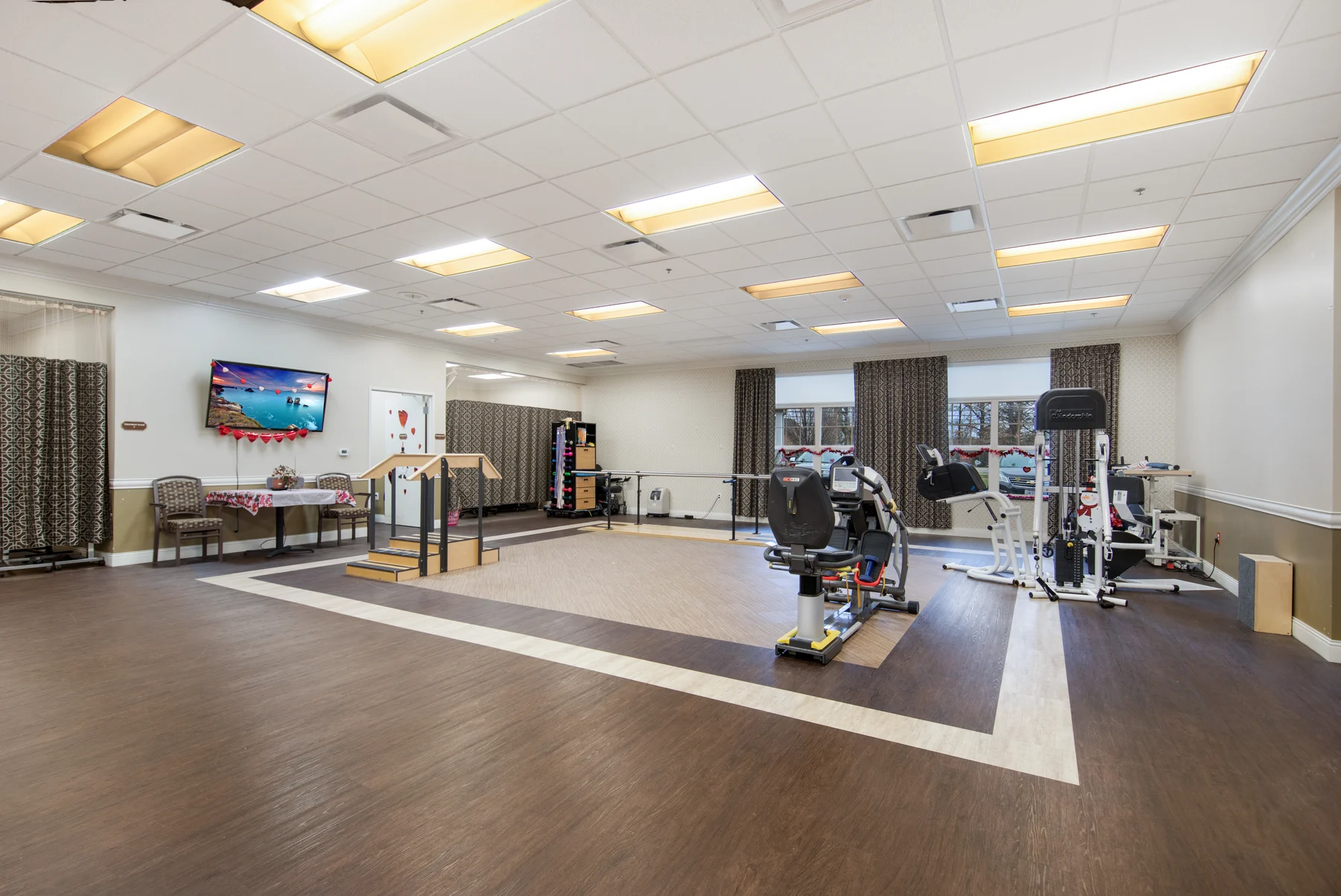
Cardiac Rehabilitation
People recovering from cardiac illness, heart-related surgery, weakness, or hospitalization who need a monitored rehabilitation plan.
Cardiac rehabilitation balances activity tolerance, energy conservation, medication routines, nutrition awareness, and symptom communication.
Individualized cardiac rehabilitation may involve physicians, nurses, therapists, nutritional consultants, and mental health professionals.
- cardiovascular endurance
- symptom awareness
- nutrition and medication routines
- care-team coordination
Discharge Planning
Residents and families preparing for a return home, assisted setting, or another next step after rehabilitation.
Discharge planning begins early because the safest next step depends on mobility, medications, wound needs, equipment, caregiver support, and home layout.
Home evaluations before discharge may be appropriate, including suggestions, modifications, or equipment that may support a safer transition.
- home-safety planning
- equipment discussion
- caregiver education
- follow-up coordination
Neuromuscular Therapy
Residents affected by weakness, neurological conditions, muscle changes, coordination concerns, or reduced endurance.
Neuromuscular therapy supports safer movement, strength, coordination, posture, balance, and participation in everyday tasks.
The plan may involve physical, occupational, and speech therapy depending on how the condition affects mobility, self-care, cognition, communication, or swallowing.
- coordination and balance
- strength and endurance
- adaptive strategies
- interdisciplinary therapy
Orthopedic Rehabilitation
People recovering from joint replacement, fracture, spine procedure, orthopedic injury, or mobility-limiting pain.
Orthopedic rehabilitation focuses on safe movement after a bone, joint, or surgical event. Therapy may include transfers, walking, stairs, range of motion, strengthening, and precautions ordered by the physician.
Families should ask about weight-bearing status, brace or splint needs, pain control, incision or wound care, follow-up appointments, and what must be practiced before discharge.
- joint and fracture recovery
- mobility precautions
- stairs and transfer practice
- pain-aware activity
Post-Surgical Rehabilitation
Residents who need therapy and nursing oversight after surgery before they can safely move to the next setting.
Post-surgical rehabilitation connects mobility work, medication routines, incision or wound needs, nutrition, pain communication, and follow-up appointments.
The team reviews hospital instructions and physician orders so therapy goals respect precautions while still rebuilding strength and function.
- post-operative mobility
- wound or incision awareness
- medication routines
- follow-up planning
Wound Care
Residents with surgical wounds, pressure injuries, diabetic wounds, vascular wounds, or other healing needs that require skilled oversight.
Wound care includes ordered treatments, monitoring, skin protection, nutrition awareness, pain communication, and attention to mobility or pressure-relief routines.
A strong wound-care plan often involves nursing, dietary awareness, therapy, physician communication, and family education about what to watch for.
- ordered treatments
- skin and pressure relief
- nutrition awareness
- physician communication